
Expert Support
Visit our Helpdesk
Visit our Helpdesk

A 1914 Star with a name and service number impressed around its reverse is not simply an old medal. It is a direct connection to a particular serviceman, unit and period of service. Establishing WW1 medal provenance gives that object its proper context, whether you are assessing a collector’s purchase, sorting a family estate or preparing medals for respectful display.
For British First World War medals, the process is often rewarding because many campaign awards were officially named. Yet a name alone is only the beginning. Men with identical names served in different regiments, medal groups can be broken up and reunited incorrectly, and family stories may contain details that are sincere but mistaken. Good provenance is built from evidence, not assumption.
Provenance is the documented history of a medal from the recipient to its present owner. In an ideal case, it identifies the recipient, confirms entitlement, explains the composition of the group and records its passage through the family or collecting market.
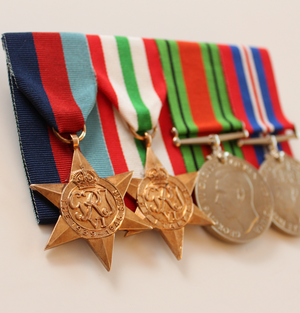
For a British WW1 campaign medal, the rim inscription normally provides a strong starting point. It commonly includes the recipient’s rank, initials, surname, service number and regiment or corps. A full trio - the 1914 or 1914-15 Star, British War Medal 1914-20 and Victory Medal - can show the broad outline of service. A 1914 Star may indicate service in France or Belgium during 1914, while a clasp and roses denote particularly early arrival. These details must still be checked against official records.
Provenance matters for more than value. It protects the personal history attached to an award and helps ensure that medals are described, mounted and displayed accurately. For families, it can turn a box of inherited medals into a clear record of an ancestor’s contribution. For collectors, it distinguishes a soundly attributed group from one assembled from unrelated pieces.
Before consulting records, examine the medal carefully in good light. Transcribe every letter and number exactly as it appears, including punctuation where present. Initials matter. So do changes in rank and abbreviations for units such as R.F.A., R.G.A., R.A.M.C. or A.S.C.
Photograph the obverse, reverse and naming in sharp focus. If there are several medals, photograph them together and separately. Note the suspension, ribbon, edge condition, any evidence of renaming, and whether the medals appear to have been court mounted or worn as a group. A small variation in an impressed number can lead research towards an entirely different man.
Original naming on British campaign medals is normally impressed or engraved in a style appropriate to the issue. Uneven lettering, altered numerals, excessive polishing around the rim or a name that does not align with known entitlement should prompt further scrutiny. Such signs do not automatically prove wrongdoing. They do, however, mean the medal should not be attributed with confidence until supporting evidence is found.
Do not separate medals, replace ribbons or clean surfaces before documenting them. A ribbon may be modern, but its arrangement can still reveal how a family understood the group. Old envelopes, issue boxes, forwarding slips, photographs, letters, service papers and handwritten labels may be as useful as the medals themselves.
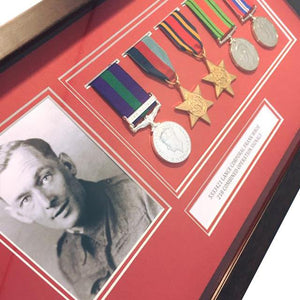
If a group includes a memorial plaque, a cap badge, a photograph or a presentation case, retain these items together. They can provide the link that turns a named medal into a fully evidenced family group. A plaque, for example, confirms a death attributable to the war but does not by itself explain every medal present.
The medal roll is the central record for researching British WW1 medal entitlement. It can confirm the campaign medals issued to a man and usually identifies his regiment or corps and service number. The accompanying medal index card may add useful details, including theatre of war, date of entry and an address or administrative annotation.
Treat the roll as evidence of entitlement rather than a complete biography. A man may have transferred between units, changed his number, been commissioned, or served under a spelling variation. The first unit shown on a medal is not always the unit with which he spent most of the war.
Service records can add the human detail: age, occupation, next of kin, addresses, postings, wounds, medical treatment and discharge. Surviving records are valuable, but many Army files were destroyed during the Second World War. Their absence is not evidence that the recipient did not serve. Pension records, casualty lists, local newspapers, unit war diaries and probate material may help fill gaps.
When several possible men share a name, combine identifiers rather than relying on one attractive match. Service number, regiment, rank, home address, next of kin and dates should point to the same individual. If they do not, describe the provenance as unconfirmed rather than forcing a conclusion.
A common research question is whether a group is complete. The answer depends on the recipient’s service. Most men who served overseas received the British War Medal and Victory Medal. Those who entered an operational theatre before 31 December 1915 could also qualify for the 1914 Star or 1914-15 Star, depending on when and where they served.
Other awards may be entirely proper additions. A Territorial Force Efficiency Medal, a long-service award, a gallantry decoration, a wound stripe or a later Second World War medal can all belong to the same person. Conversely, medals sharing a surname or coming from the same family are not necessarily one original group.
Check dates carefully. A man who did not go overseas until 1916 should not possess a 1914-15 Star. A recipient of the 1914 Star should normally have a corresponding clasp entitlement only where the records support it. Missing medals are also common. Families sometimes divided groups between relatives, medals were lost during house moves, and replacement pieces were obtained later.
The most reliable presentation is an evidence-led one: retain the medals together as found, identify what records confirm, and state plainly what remains unknown.
Oral history is often the reason research begins. “He was at Gallipoli”, “he was wounded at the Somme” or “these were his brother’s medals” may prove correct. It may also combine the experiences of several relatives over a century of retelling.
Write down the story before checking the documents, including who supplied it and when. Then test it against service and medal records. This approach preserves the family memory while avoiding the temptation to treat it as fact without corroboration. A photograph showing a man in a particular cap badge, or a letter with a field address, can sometimes settle a question that a medal roll cannot.
Be cautious with claims of rare service or gallantry. A named campaign medal is meaningful in its own right. Adding an unsupported association with a famous battle, elite unit or decoration may reduce rather than strengthen its historical value.
Once research is complete, create a concise provenance file. Include clear photographs, a transcription of the naming, copies or references to the records consulted, the family history as reported, and a note of any remaining uncertainty. Record when and from whom the group was acquired, particularly if it has been passed down through a family.
Keep original documents in archival-quality sleeves and store medals in a dry, stable environment. Avoid abrasive cleaning, harsh metal polish and adhesive tapes. Tarnish and wear are part of a medal’s history; aggressive treatment can damage both the finish and collector confidence. If medals require cleaning, repair, mounting or framing, use methods that respect the original naming and allow the group to be handled safely.
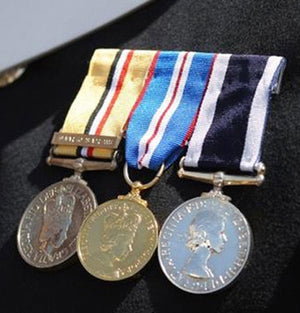
For wear, replacement or replica medals should be kept clearly distinct from original family awards. This is particularly important where several generations have served. Correct order of wear, accurate ribbons and professional mounting preserve ceremonial standards without placing irreplaceable originals at unnecessary risk.
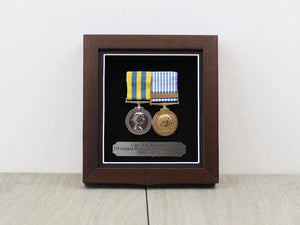
Empire Medals can assist with presentation services where medals need to be mounted, framed or preserved for future generations. The research itself should remain attached to the finished display, whether as a printed record placed behind a frame or a separate family archive.
A well-provenanced WW1 medal group does not need an embellished story to matter. The confirmed name, the service record and the careful preservation of the evidence are enough to ensure that one person’s service is neither lost nor confused with another’s.
Leave a comment