
Expert Support
Visit our Helpdesk
Visit our Helpdesk

A silver campaign medal can look perfectly bright when placed in a drawer, then develop a yellow-grey cast or dark marks months later. So, why do medals tarnish when they have not been worn? The short answer is that metal reacts continuously with its surroundings. Air, moisture, contaminants, handling and unsuitable storage materials can all alter a medal’s surface, even when it is carefully kept.
For service medals, family decorations and collector pieces, the aim is not always to make every surface look newly struck. Proper care means understanding what has changed, protecting original detail and choosing treatment that respects the medal’s age, finish and significance.
Tarnish is a surface reaction. It is different from dirt, although dust, skin oils and residue can speed it up. Most medals are made from, plated with or finished in metals that react with compounds in the atmosphere. The reaction may appear as dullness, darkening, spotting or uneven discolouration.
Silver is particularly prone to tarnishing because it reacts with sulphur compounds. These can be present in ordinary air, but also in rubber, wool, some paper, cardboard, adhesives and certain display materials. The familiar dark grey or black layer on a silver medal is usually silver sulphide.
Copper-containing alloys, including bronze and many gilt or base-metal medals, react differently. They may develop brown, red, green or blue-green changes. A stable, even brown tone can be part of a medal’s natural ageing. Powdery, bright green deposits, however, can indicate active corrosion and deserve prompt specialist attention.
Not every medal has the same composition. British military medals may be sterling silver, bronze, cupro-nickel, white metal, gilt metal or a plated alloy, depending on the issue and period. Replica medals can also use different materials and finishes from their original counterparts. This is why one cleaning method should never be assumed suitable for an entire group.
Humidity is one of the principal causes of rapid change. Moist air settles on metal as a very fine film, allowing pollutants and salts to react more readily. A loft, garage, cellar or exterior wall cupboard may experience swings in temperature and damp, even if it does not feel wet to the touch.
Handling also matters. Fingerprints leave moisture, salts and natural oils behind. On polished silver, these may eventually show as visible marks. Clean, dry hands are better than frequent handling, while nitrile gloves are useful when examining highly polished, archival or especially vulnerable pieces. Cotton gloves can snag on fittings or leave fibres, so they are not always the best choice.
Storage materials are often overlooked. Common cardboard boxes, newspaper, rubber bands, foam inserts and PVC plastic wallets can release chemicals as they age. A medal stored beside a rubber-backed item or in an unsuitable cabinet lining may tarnish more quickly than one displayed in open air. Newly fitted furniture, paints and cleaning products can also give off vapours that affect metal finishes.
Poor cleaning can create another problem. Abrasive polishes remove a microscopic layer of metal with every use. Over time, they soften lettering, erase fine die-struck detail and leave an unnaturally bright surface. Liquid silver dips may work quickly, but can strip tarnish unevenly, affect plated areas and leave residues if used incorrectly.
Collectors often use the word patina to describe the surface character acquired through age. On a historic medal, light toning may enhance the relief and provide an honest record of its history. Removing it simply to achieve a brighter appearance can reduce collector appeal and alter the object unnecessarily.
Tarnish is usually a thin, superficial reaction. Corrosion is more serious: it may pit the surface, lift plating, cause flaking or create deposits that continue to grow. Verdigris - often green or blue-green - is associated with copper alloys, but its presence does not automatically mean a medal is beyond saving. The key distinction is whether the change is stable and even, or active, powdery and spreading.
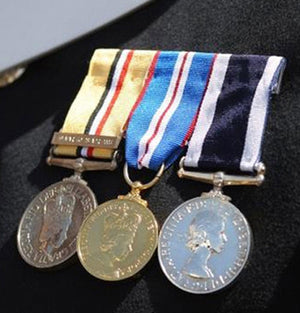
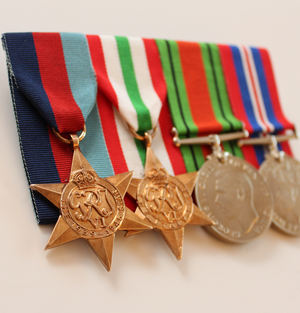
Ribbons require separate consideration. They are textile, not metal, and are vulnerable to fading, staining, mildew and fraying. Moisture, direct sunlight and aggressive cleaning are as damaging to ribbons as they are to medal finishes. A complete mounted group should therefore be assessed as one presentation piece, rather than treating the medals alone.
The best environment is clean, dry, stable and away from direct sunlight. Avoid storing medals in bathrooms, kitchens, garages, sheds and loft spaces. A cupboard within the main living area is usually more reliable, provided it is not against a damp external wall or beside a radiator.
Use inert, archival-quality storage materials where possible. Acid-free tissue and suitable archival boxes provide a protective barrier without introducing the acids and sulphur compounds found in many everyday papers and cardboards. Individual separation is helpful for loose medals, as it prevents pieces rubbing together and reduces transfer from one metal to another.
Plastic requires care. PVC is unsuitable for long-term storage because it can release plasticisers and trap harmful moisture. If clear sleeves are needed for handling or organisation, choose archive-safe polyester, polyethylene or polypropylene materials made for conservation use. Do not seal medals while they are damp or freshly cleaned.
Silica gel can help in a display case or storage box where humidity is a concern, but it is not a cure for a persistently damp room. It must be monitored and regenerated or replaced according to the manufacturer’s guidance. Excessively dry conditions are not ideal for ribbons and backing materials either, so a stable middle ground is preferable.
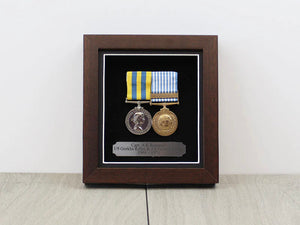
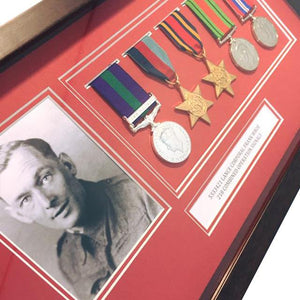
Framing offers excellent protection and presentation when correctly specified. A well-made frame keeps a medal group supported, reduces handling and shields ribbons from dust and light. The trade-off is that cheap mounts, adhesives or backing boards can cause long-term damage. Conservation-conscious framing uses appropriate boards, secure mounting methods and enough depth to prevent pressure on medals and ribbon bars.
It depends on the medal, its value and the nature of the surface change. For a modern parade-ready replica or replacement medal, a carefully controlled clean may be appropriate where a uniform appearance is required. For an original named medal, gallantry award, family group or historically scarce issue, restraint is usually the safer course.
Start with the least invasive option. Remove loose dust using a soft, clean brush with minimal pressure. Do not scrub recesses, ribbon edges or engraved areas. If the medal is simply dull but otherwise stable, improved storage and reduced handling may be all that is needed.
Avoid household metal polish, toothpaste, bicarbonate methods, vinegar, lemon juice and abrasive cloths. These are unpredictable across different alloys, plating and lacquers. They may produce a brief shine while permanently changing the surface. Do not attempt to clean a medal with loose plating, flaking finish, sticky deposits or active green corrosion.
Professional cleaning is particularly worthwhile when medals are mounted, engraved, enamelled, lacquered or accompanied by original ribbons. An experienced service can identify the metal and finish, clean only where appropriate, and advise whether a protective stay-bright coating is suitable. Such coatings can reduce future tarnishing, but they must be properly applied to a prepared surface and are not the right answer for every historic piece.
At Empire Medals, cleaning, stay-bright coating, medal mounting and framing can be considered together, which is useful when a group needs both a respectful finish and secure presentation. The correct approach should always be led by the medal’s condition and intended use, not by a one-size-fits-all expectation of shine.
A little even toning is rarely urgent. Seek advice sooner if you notice a powdery green or blue deposit, pitting, flaking plating, corrosion around suspension rings, sticky residue from old tape or adhesive, mould on ribbons, or a sudden change after moving a medal into a new case. These signs can worsen if the medal remains in the same environment.
It is also sensible to pause before cleaning any medal with a name, service number, unit detail or provenance that may carry historical and monetary significance. Original surfaces, edge inscriptions and ribbon combinations are part of the record. Photographs taken before any work begins provide a useful condition reference for families and collectors alike.
A medal does not need to look factory-new to be properly cared for. A stable surface, clear detail, sound ribbon and suitable presentation preserve far more than appearance: they protect the service, memory and history the medal represents.
Leave a comment