
Expert Support
Visit our Helpdesk
Visit our Helpdesk

A campaign medal is never simply a piece of metal on a ribbon. Its design, suspension, ribbon colours and authorised clasps all identify a particular period of service. For those building a representative collection, replica campaign medals for collectors make it possible to study and display that history without confusing a modern acquisition with an original issued award.
A well-chosen replica can stand on its own as an accurate example of a campaign award, complete a display focused on a regiment or conflict, or help preserve the appearance of a family group where an original has been lost. The standard required, however, should be higher than a medal that merely looks convincing at a distance. Correctness in the smaller details is what gives a collection lasting value.
Original British campaign medals carry considerable historical weight, but they are not always the right answer for every collection. Early awards may be scarce, expensive or condition-sensitive. Later awards can be difficult to source with the correct clasp entitlement, while original groups may have been separated over time. A replica provides a practical alternative when the purpose is interpretation, display or ceremonial representation rather than ownership of an issued artefact.
For many families, a replacement or commemorative set is a respectful way to recognise service without placing a valuable original at risk. Reenactors may require an accurate medal for period impression, but should make clear that it is a replica. Collectors often use replicas to show the progression of British campaigns, from Victorian and First World War service through to Korea, Northern Ireland, the Gulf, Afghanistan and multinational NATO or United Nations operations.
The distinction must remain clear. A replica is not an original, is not evidence of entitlement and should never be represented as an issued medal. Responsible collecting depends on honest description, especially where medals are offered with naming, clasps or assembled groups.
The appearance of the medal face is only one part of the assessment. Authentic quality comes from the relationship between every component: the die-struck detail, the metal finish, the ribbon, the suspension and, where applicable, the clasp. A poorly made copy may have softened lettering, an incorrect profile or ribbon colours that are slightly wrong. These faults are immediately noticeable once a medal is placed beside a properly made example.
British-made, die-struck replicas are generally preferred by serious collectors because the strike has definition and depth. Fine details in a monarch's effigy, campaign scene or reverse inscription should remain sharp. The medal should also have the correct weight and proportion for its type. Casting can be suitable for certain display purposes, but it rarely provides the precision expected for a formal collection or mounted set.
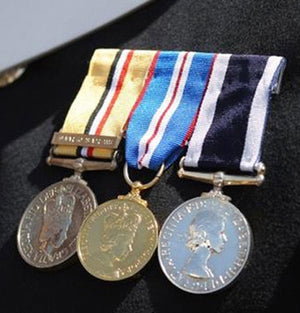
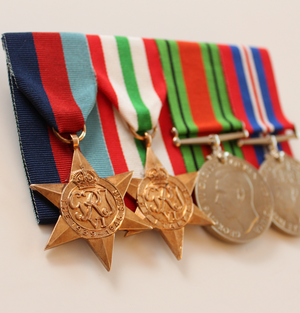
Ribbon accuracy deserves equal attention. Campaign ribbons are a recognised part of the award's identity, and variation in stripe width, sequence or shade can alter the whole presentation. Look for ribbon woven to the appropriate pattern and cut to the correct width. This matters particularly when several medals are displayed together, as an inconsistent ribbon will interrupt the visual order of the group.
Clasps record a specific theatre, operation or period and are not decorative additions. Their wording, form and placement must be correct for the medal concerned. Some campaigns involved multiple clasps, while others used a single dated or geographical bar. The right clasp can make a substantial difference to the historical meaning of a replica, so it should be selected only after checking the relevant service and campaign criteria.
This is one area where specialist advice is useful. A collector creating a representative group may choose a historically correct medal and clasp combination without claiming personal entitlement. A veteran replacing a lost medal should ensure that every clasp reflects the official record. The same care applies to rosettes, emblems and devices used with particular awards.
The strongest collections have a defined thread. Some collectors focus on one regiment, corps or branch of service. Others follow a period of British history, such as imperial campaigns, the world wars or post-war operations. A campaign-by-campaign display can be particularly effective because it allows medals, ribbons and explanatory captions to show how service recognition evolved.
Replica campaign medals for collectors are especially useful in thematic displays where acquiring every original would be impractical. A full sequence of campaign awards can show changes in royal effigies, ribbon design and operational geography without the gaps caused by rarity or cost. It also allows collectors to include medals that would otherwise be too precious to display openly.
There is a trade-off. An original medal has individual provenance, wear and, often, naming that connects it to one person's service. A replica cannot replace that evidence. Where provenance is the purpose of a collection, original and properly researched medals remain essential. Where the aim is accurate visual history, education or a complete campaign sequence, replicas can be the more sensible choice.
A carefully selected medal can lose much of its impact if it is mounted incorrectly. Full-size and miniature medals follow different conventions, and the correct arrangement depends on whether the set is intended for wear, framing or cabinet display. Medal order should reflect the official Order of Wear, with campaign awards, commemoratives and foreign awards placed appropriately.
For wearable sets, court mounting gives a neat, supported finish and is often preferred for parade and formal occasions. Swing mounting retains the traditional free-hanging movement of medals and may suit certain historical presentations. Neither is universally better. The right choice depends on the period, the purpose of the set and personal preference, provided that the medals are placed in the proper order and professionally finished.
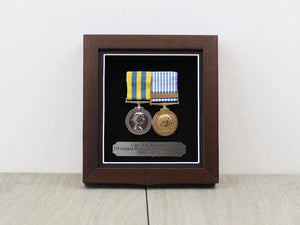
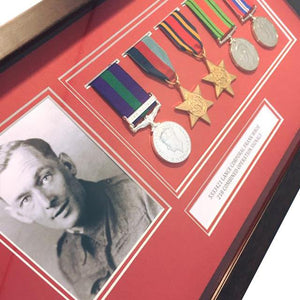
Framing is often the best option for a family keepsake or collection display. A well-planned frame can include the medal or group, a cap badge, photographs, service details and a discreet explanatory label. Avoid gluing medals directly to a backing or using materials that may stain ribbon over time. A protected presentation should support the medals securely while allowing them to be removed if necessary.
Replica medals are usually more forgiving than aged originals, but they still benefit from sensible care. Handle them by the edges where possible, keep ribbons away from damp conditions and avoid harsh metal polishes. Abrasive cleaning can flatten fine detail and leave an unnatural shine.
Original medals require greater restraint. Tarnish, wear and patina can form part of their history, and aggressive cleaning may reduce collector interest. If an original family medal needs attention, a specialist cleaning and conservation approach is preferable to household products. Stay-bright coatings can be appropriate for some modern presentation needs, but should be considered carefully rather than applied as a default to historic pieces.
Before selecting a replica, establish what you are trying to represent. Is it a single campaign award, a replacement for documented service, a miniature set for formal wear or a historical display? That answer determines the size, clasp, ribbon and presentation required.
Choose clear product descriptions that identify whether a medal is a licensed replica, its intended format and the available mounting options. MoD Licensed Replica Medals offer particular reassurance for modern British awards, while British-made die-struck examples provide the finish and detail collectors expect. If the intended display involves several medals, it is worth checking the entire arrangement before any mounting begins.
Empire Medals supports this process with specialist replica medals, ribbons, clasps and presentation services, allowing collectors and families to bring individual pieces together in a properly finished display. The value lies not only in sourcing the correct medal, but in ensuring that it is presented with the care its history deserves.
A replica campaign medal earns its place in a collection when it is accurate, honestly identified and thoughtfully displayed. Chosen on those terms, it becomes a clear record of the campaigns, people and traditions that British military medals were created to remember.
Leave a comment