
Expert Support
Visit our Helpdesk
Visit our Helpdesk

A clasp can turn an apparently familiar campaign medal into a precise record of where, when and under what conditions someone served. Medal clasps and rosettes are small details, but they carry significant meaning. For serving personnel, veterans, families and collectors, getting those details right is essential to respectful, accurate presentation.
A medal without its entitled clasp may be incomplete. Equally, adding a clasp or rosette simply because it appears plausible can misrepresent service. The right approach is always evidence-led: establish the award entitlement first, then select the correct medal, ribbon, clasp, device and mounting style.
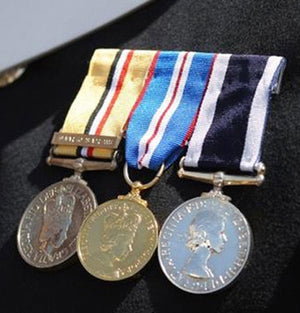
A medal clasp is a bar, usually made of metal, attached across the ribbon of a full-size or miniature medal. It indicates a particular period, theatre, operation or additional qualifying service connected with that award. The wording on the clasp is the key detail. It may name a campaign, such as a particular operation or region, or record a date range relevant to the recipient's service.
Clasps have been used across many periods of British military history. Their form varies considerably. Earlier campaign medals may have broad, substantial bars with formal engraved lettering, while modern awards tend to use more standardised designs. Some medals were issued with several potential clasps, and entitlement depended on the recipient's exact unit, location and dates of service.
The presence of a clasp does not necessarily mean that a recipient earned a separate medal. More often, it records a further distinction within the qualification for the same medal. This is why the medal and its clasp must always be considered together rather than as separate decorative items.
The wording on a clasp should be read literally, but interpreted in its historical context. A named operation may have had narrowly defined qualifying dates. A geographical clasp may apply only to service in a stated area, not to every deployment in that wider conflict. In some cases, qualifications differed between branches of the Armed Forces, attached personnel and civilian categories.
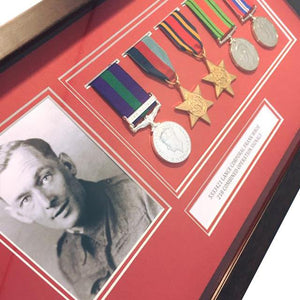
Service records, discharge papers, original award documents and official medal rolls are the strongest sources for confirming entitlement. Family recollection can be valuable context, but it should not be the sole basis for ordering an additional clasp. This matters particularly when replacing lost medals or preparing a family group for framing.
A rosette is a small, circular ribbon device used to show that the wearer is entitled to a clasp when wearing ribbon only. On a ribbon bar, it provides a visible indication that the corresponding full-size medal carries a clasp. It is not a substitute for the clasp itself.
For full ceremonial wear, the actual clasp is fitted to the medal ribbon. For everyday uniform wear, where ribbon bars are worn instead of full medals, the appropriate rosette is generally placed on the ribbon bar. This keeps the record of entitlement visible without requiring the full medal group to be worn.
Rosettes are often small enough to be overlooked, yet they are among the most important accuracy checks on a ribbon bar. A missing rosette may leave a ribbon bar incomplete. A misplaced one can look untidy and, more importantly, may give an incorrect impression of the award.
There are exceptions. Some awards use other authorised emblems, numerals or devices to indicate additional service, repeat awards or specialist qualification. The appropriate device depends on the individual medal and the regulations in force for that award. It is therefore unwise to assume every clasp is represented in precisely the same way on a ribbon bar.
The word rosette can also describe a small buttonhole or lapel emblem associated with an order, decoration or campaign ribbon. That is a different item from the rosette fitted to a military ribbon bar. Both may use ribbon and both have a presentation role, but they serve different purposes and should not be interchanged.
When ordering, it is worth checking whether the requirement is for a ribbon-bar rosette, a lapel rosette, a full-size clasp, or a miniature clasp. A specialist supplier will normally list these separately because the scale, fitting and intended wear are different.
A clasp must sit squarely across the ribbon, with its lettering level and clearly visible. It should be fitted at the correct point for the medal concerned, not forced into position by pinning or adhesive. Poor fitting can crease the ribbon, scratch the medal or leave the clasp loose enough to move during wear.
Miniature medals require particular care. Their clasps are scaled to suit the narrower ribbon and should never be made from altered full-size fittings. A full-size clasp on a miniature group is immediately noticeable and disrupts the balance of the set. The same principle applies to rosettes: use the correct size for the ribbon bar or miniature ribbon.
Where multiple clasps are authorised for one medal, their order and spacing should follow the relevant official pattern. This is an area where historical examples can be misleading. Medal groups were sometimes altered after issue, and not every old mounting reflects current or original regulations. A professional check is worthwhile before a group is remounted.
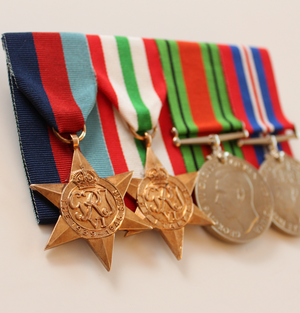
Court mounting gives a medal group a clean, secure appearance by fixing the medals to a backing. It is often preferred for parade wear because it reduces movement and helps the group sit neatly on the uniform. Swing mounting leaves each medal free to move from its suspension ribbon. Both styles have a recognised place, depending on service custom, personal preference and the nature of the group.
Clasps must remain visible and correctly aligned in either style. A tightly mounted group can conceal part of a clasp if ribbons are folded or overlapped carelessly. Conversely, a poorly arranged swing-mounted group can cause clasps to knock against neighbouring medals. The right mounting method is not only about appearance. It protects the medals while ensuring each award can be read properly.
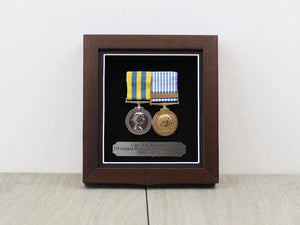
For inherited groups, preservation often takes priority over changing an original mount. Before any cleaning, ribbon replacement or remounting, consider whether the existing arrangement has historical value. Original ribbons and fittings may show age, but they can also form part of the group's provenance. A sympathetic assessment helps distinguish necessary repair from unnecessary alteration.
Replacement clasps can be appropriate where an original has been lost, where a medal has been replaced, or where a properly evidenced replica group is being assembled for wear. Quality matters. A badly cast or incorrectly lettered clasp can undermine an otherwise accurate medal set.
For modern replacement awards, MoD Licensed Replica Medals provide a dependable basis for correct presentation when supported by the right entitlement evidence. For earlier medals, British-made and die-struck components are often preferred for their crisp detail, proper weight and faithful finish. The aim is not to make an old group look artificially new, but to provide an accurate, dignified representation of the award.
Collectors should also keep replacement parts clearly documented. If a clasp, ribbon or medal has been added after the original issue, retaining a note of that work protects the history of the group for future family members or collectors. Transparency supports value and prevents later confusion.
Family medals often arrive with incomplete information: a single medal in a drawer, a ribbon bar without its corresponding full-size awards, or a group whose clasps have become detached over time. Start by recording every inscription, service number, rank, unit and date before any work is undertaken. Photographs of the original condition are useful, especially if the group will be mounted, framed or restored.
It may be tempting to polish everything immediately, but restraint is usually wiser. Harsh cleaning can damage patina, lettering and historic finishes. Loose clasps, frayed ribbons and worn suspensions can be addressed by experienced hands while keeping the character of the original group intact.
Empire Medals can assist with medals, ribbons, clasps and presentation services where an accurate replacement or professional finish is required. The crucial point remains the same: every addition should reflect verified entitlement and the correct period pattern.
A clasp or rosette may be small, but it should never be treated as an afterthought. When it is correctly identified, properly fitted and respectfully preserved, it completes the service story that the medal was issued to record.
Leave a comment