
Expert Support
Visit our Helpdesk
Visit our Helpdesk

A ribbon bar may be small, but it carries the same significance as the full-size medal it represents. Knowing how to wear medal ribbons correctly protects that meaning, presents a smart appearance on parade and ensures the awards are recognised in their proper order. For serving personnel, the final authority is always the current dress regulation for your Service, unit instructions and the direction of the chain of command.
A medal ribbon is the narrow strip of coloured ribbon associated with a specific award, campaign medal, decoration or commendation. When worn in a ribbon bar, it allows authorised awards to be displayed on forms of uniform where full-size medals would be unsuitable or impractical.
Ribbon bars are not simply decorative. Their colours, stripes and order record service, operational tours, gallantry, long service or other recognised achievement. They should therefore be accurate in both design and precedence. A faded, incorrectly cut or unofficial substitute ribbon can undermine an otherwise well-presented uniform.
Full-size medals and ribbon bars serve different purposes. Full-size medals are normally worn for ceremonial occasions when the prescribed order of dress calls for them. Ribbon bars are more commonly worn on working, service or everyday uniform where authorised. Do not assume that because medals are permitted on an occasion, ribbon bars should be worn as well. In most cases, they are alternatives rather than items worn together.
On British uniform, medal ribbons are generally worn on the left side of the chest, in the position set out by the relevant Service dress regulations. On garments with a breast pocket, this is commonly above the pocket. The bar should sit level, neat and close to the garment, not drooping at either end or standing away from the fabric.
The precise placement can vary by Service, uniform pattern and order of dress. Army, Royal Navy and Royal Air Force requirements are not interchangeable, and specialist uniforms may have additional instructions. A serving member should consult the current publication issued for their Service before fixing a bar permanently.
For a clean finish, use a properly made ribbon bar or mounting backing rather than loose lengths of ribbon attached separately. Each ribbon should be the correct width, with edges aligned and no visible gaps between adjacent awards. The bar should be secured so it remains straight through normal movement, drilling and wear.
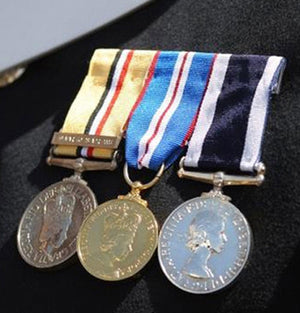
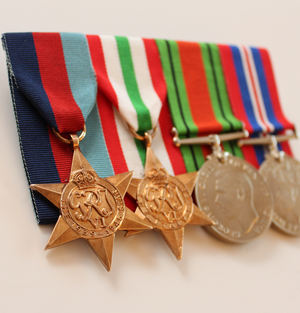
The order of wear is determined by official precedence, not by personal preference or the date an award was received. British decorations, campaign medals, jubilee medals, Commonwealth awards and foreign awards can each have different places within that order. Awards of higher precedence are placed first, starting from the wearer's right when looking at the ribbon bar - which is the observer's left.
This point often causes confusion because the wearer sees the bar in reverse. Before mounting, lay the ribbons out while facing a mirror or ask a specialist to confirm the sequence. Never rely solely on an old photograph, a family arrangement or the order in which medals happen to be stored.
Foreign awards require particular care. Permission to accept and wear them may be required, and the approved position can differ from that of British awards. Commonwealth awards and United Nations or NATO medals may also have specific rules. If there is any uncertainty, obtain confirmation through official channels before adding a ribbon to a serving uniform.
The number of ribbons on each row is governed by Service regulations and the available width of the uniform. Where more than one row is required, the rows should be centred, evenly spaced and arranged in the correct pattern. A badly balanced display can look untidy even when every individual ribbon is correct.
Avoid trying to solve a crowded bar by reducing ribbon widths, overlapping ribbons or changing their order. A professionally made bar is the better answer, particularly for personnel with a substantial entitlement. It will be cut to the required dimensions, mounted securely and finished to match the appropriate style.
Before wearing any medal ribbon, confirm that the underlying medal or award was formally granted and that you are entitled to wear it. This is especially relevant when replacing lost items, preparing inherited medals for display, or building a family record from incomplete paperwork.
Service documents, medal rolls, award citations, discharge papers and official correspondence can help establish entitlement. The wording of an award may matter. A campaign medal, clasp entitlement, commendation and emblem can each affect what should appear on the ribbon bar. For example, a clasp on a full medal does not always mean that a separate feature appears on the ribbon bar; authorised emblems and devices must follow the regulations that apply to that award.
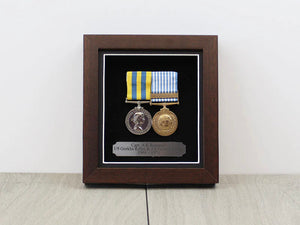
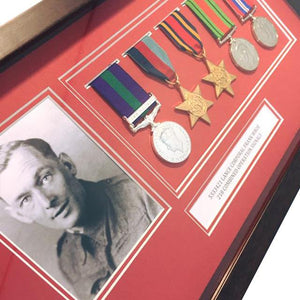
Collectors and family members should take a different approach from serving personnel. A ribbon bar made for a display case, framed group or historical reconstruction can be valuable, but it should be clearly distinguished from an item intended for current uniform wear. Historical accuracy remains essential, particularly where a group includes wartime, colonial, United Nations or more recent operational awards.
Ribbon bars are principally a uniform item. For Remembrance services, memorial events, mess functions and other civilian occasions, veterans will often wear full-size medals on the left breast when appropriate. Relatives do not wear another person's medals on the left breast. When medals are worn in remembrance of a deceased family member, they are traditionally placed on the right breast.
There are exceptions depending on the event, dress code and organisational guidance. Veterans' associations may issue their own advice for particular parades, while formal invitations can specify medals or decorations. If an occasion is ceremonial, it is worth checking in advance rather than arriving with the wrong form of wear.
For civilian lapel wear, a discreet rosette or authorised small emblem may be more suitable than a ribbon bar. The key distinction is respect: wear awards in a way that accurately represents entitlement and fits the formality of the occasion.
Ribbons collect dust, lose their shape and can fade if stored in direct sunlight. Keep a ribbon bar flat and dry, away from damp conditions and strong light. If the uniform is dry-cleaned or pressed, remove detachable bars first where possible, or tell the cleaner that awards are attached.
Do not wash ribbon bars aggressively, apply household polish or attempt to repair frayed edges with adhesive. Replacement is usually the neater and more reliable option. This is particularly true for older bars, where colours may have changed over time and no longer match the correct official ribbon.
A well-made replacement should use accurate ribbon colours and proper construction. For medal groups that are also worn in full size, having the ribbons, medal mounting and presentation checked together helps maintain a consistent appearance across ceremonial and service dress.
Professional help is useful when a medal group includes several rows, foreign awards, clasps, emblems or an uncertain order of precedence. It is also sensible when restoring a relative's group, where the aim is to preserve history without guessing at details.
Empire Medals can assist with accurate ribbons, medal mounting and presentation work for British military and civilian awards. For serving personnel, that specialist support should complement - never replace - the current instructions issued by your Service.
A correctly worn ribbon bar is a concise record of service, commitment and distinction. Take the time to verify entitlement, follow the applicable dress regulations and have the bar made properly. The result is not merely smart uniform presentation, but due respect for every award represented.
Leave a comment