
Expert Support
Visit our Helpdesk
Visit our Helpdesk

A named Second World War group found in a drawer can be worth far more than its metal content. Equally, a rare-looking single medal with no confirmed history may have limited collector appeal. The question, do war medals increase value, therefore has no single answer. Medals can increase the value of a collection, an estate or a family heirloom, but the premium comes from evidence, completeness, condition and the story that can be properly supported.
For many families, the most significant value is not financial. A campaign medal links a relative to a unit, a period of service and, sometimes, a defining moment in British history. That personal connection deserves careful preservation whether the group has a strong auction value or not.
Usually, yes, but not simply because a medal was issued during a war. Millions of British campaign medals were awarded, particularly for the two World Wars. Their desirability varies widely according to who received them, where they served, whether the award is officially named, and whether it remains with its original entitlement and paperwork.
Collectors generally pay for scarcity and certainty. A standard Second World War Defence Medal and War Medal 1939-45 pair is historically important, yet relatively common when unnamed and separated from its original box or documents. Add a correctly named gallantry award, a less frequently encountered campaign entitlement, a casualty connection, service records or a well-documented unit history, and the same broad period becomes much more collectable.
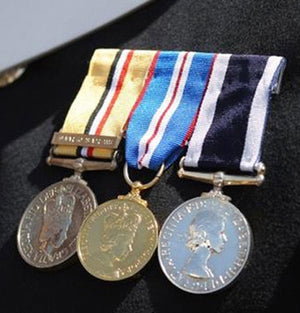
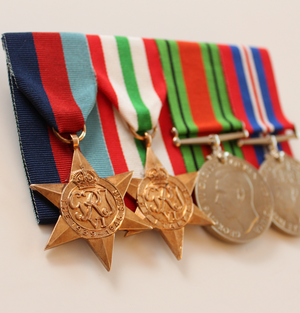
The strongest results tend to come from groups rather than isolated medals. A complete, correctly ordered group shows a serviceman's or servicewoman's career more clearly than a single piece. It can also be considerably harder to recreate convincingly, especially where the medals, ribbons, naming style and supporting papers all belong together.
A medal may have been awarded in small numbers, but rarity alone is not enough. Demand matters. A scarce award connected to a well-researched regiment, notable action or specialist branch of service will often attract greater interest than an equally scarce medal with little available context.
Gallantry decorations command particular attention, but their value can differ substantially according to the award, the period, the recipient and whether a citation survives. Campaign medals for difficult-to-research theatres, early conflicts and certain naval, aviation or colonial services can also be keenly sought. There is no reliable rule that says older always means more valuable.
Official naming is one of the most useful features in British medal collecting. Depending on the era and award, naming may show a recipient's rank, initials, surname, service number and regiment or corps. It gives a collector a starting point for research and helps establish that the medal belongs to a particular individual.
Provenance means the documented history of ownership and service. Original medal cards, service papers, discharge documents, photographs, letters, citation copies, condolence slips, investiture material and original issue boxes can all strengthen a group. They do not need to be extensive to matter. Even a family note identifying the recipient, supported by official records, can make the difference between an anonymous object and a properly understood medal group.
Claims should always be treated carefully. A family story may be entirely true, but collectors will usually pay more when it can be matched to records. Avoid separating paperwork from the medals it relates to. Once divided, the historical and financial value of both can be reduced.
A group should be kept together wherever possible. Removing a gallantry medal, selling a star separately or splitting medals between relatives may seem practical at the time, but it breaks the service story and commonly weakens collector value.
Completeness also includes the right clasps, original or period ribbons, suspension and mounting. A medal issued with a clasp is not necessarily more valuable if the clasp has been added later or is not entitled to the recipient. Accuracy matters more than appearance. A correct, modestly presented group is preferable to a visually impressive group assembled from unrelated components.
Collectors look for clear naming, intact suspension, honest surfaces and ribbons that are not excessively worn, faded or replaced without disclosure. Damage, edge knocks, heavy polishing and corrosion can affect value. So can missing clasps, altered engraving and repaired or re-soldered parts.
However, medals are historical objects, not newly struck ornaments. Light age toning, minor service wear and a period court mount may be entirely appropriate. Over-cleaning can remove the surface character collectors expect to see and may make later assessment more difficult. Do not use abrasive metal polish, household cleaners or attempts at re-plating on an original award.
If medals require attention for family display, conservation-minded cleaning and professional mounting are the safer route. The objective is to stabilise and present the group respectfully, not to make an original medal look newly manufactured.
This distinction is essential when assessing value. An officially issued original medal is a historic artefact and may carry collector value. An authorised replacement, a modern die-struck reproduction or an MoD licensed replica fulfils a different purpose: accurate wear, replacement of a lost entitlement, ceremonial use or display.
A high-quality British-made replica can be the right choice for a veteran or family wishing to mount and wear medals while protecting originals at home. It should not, however, be represented or priced as an original issued medal. Clear descriptions protect buyers, preserve trust and prevent a replacement set from being confused with a historical group.
Engraving can also affect the position. Officially named originals should never be altered to create an apparent attribution. Where a replacement medal is being engraved for presentation, the work should be accurate to the entitlement and clearly understood as modern engraving.
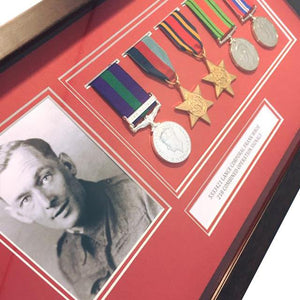
Correct presentation does not usually transform a common medal into a rare one, but it can protect the condition and desirability of a group. Proper court mounting keeps medals secure and in the correct order for wear. A well-made frame protects medals from handling, dust and light while allowing records or photographs to remain with them.
There is a balance to strike. A modern court mount may be ideal for parade wear, but an untouched original swing-mounted group with original ribbons can be more desirable to some collectors. Before remounting, consider whether the existing arrangement is period, original and historically meaningful. Photograph the medals front and back, together with any mounting, before work begins.
For display, avoid adhesive directly on medals, damp environments and prolonged direct sunlight. Keep original boxes, envelopes and ribbons even if a new mounting is commissioned. Empire Medals can assist with specialist mounting, framing and presentation options where medals need to be protected without losing sight of their history.
Start by recording exactly what is present. Photograph both sides of every medal, note the edge naming, clasps, ribbon condition, box labels and any accompanying documents. Do not assume that medals are in the correct order or that every ribbon belongs to the group.
Next, identify the recipient through the naming and compare the entitlement with available service information. Check whether medals are original issues, replacements or later additions. For potentially valuable groups, independent specialist advice and current market comparisons are more useful than a general internet estimate. Values move with collector demand, and two outwardly similar groups can differ sharply once the recipient's record is known.
Insurance value and sale value are not the same. Replacement costs may reflect the difficulty of sourcing comparable pieces, while a private sale or auction result depends on timing, documentation and buyer interest. A formal valuation should state its purpose clearly.
The best time to research a medal group is before it is divided, cleaned or put away without its papers. Write down names, family memories and known service details while they can still be checked. Place copies of records with the medals, retain the originals safely, and make sure future custodians understand which items belong together.
A war medal may increase financial value when rarity, provenance and condition align. Its lasting value, though, is often found in the service it records and the care taken to pass that history on intact.
Leave a comment