Expert Support
Visit our Helpdesk
Visit our Helpdesk

The Arctic Star is a British military campaign medal awarded in recognition of service in the Arctic theatre during the Second World War. It honours the extraordinary courage and endurance of the sailors, airmen and soldiers who operated in some of the harshest conditions of the conflict.
The medal commemorates those who served on the Arctic Convoys and other qualifying operations north of the Arctic Circle between 3 September 1939 and 8 May 1945. Facing freezing temperatures, severe storms, enemy submarines, aircraft and surface warships, these men and women played a vital role in sustaining the Allied war effort.
This guide explains the history of the Arctic Star, who qualified for the award and why the Arctic Campaign remains one of the most remarkable chapters of the Second World War.
When mounting medals, the order begins with the Victoria Cross, followed by the George Cross, and continues through various orders of chivalry, campaign medals, and long service awards. Understanding this hierarchy is essential for proper display and respect for military tradition.
The Arctic Star is a British campaign medal instituted to recognise service in the Arctic theatre during the Second World War.
Although the campaign took place between 1939 and 1945, the medal itself was not approved until 2012 following a review of the honours system and long-running campaigns by veterans and their families.
The award provides long-overdue recognition for those who served in one of the most dangerous operational environments of the war.
The award provides long-overdue recognition for those who served in one of the most dangerous operational environments of the war.
Following Germany's invasion of the Soviet Union in June 1941, Britain and its Allies began supplying military equipment, fuel, food and other essential materials to support the Soviet war effort.
These supplies were transported aboard merchant ships travelling in convoy from Britain, Iceland and other Allied ports to northern Russia.
The route passed through Arctic waters where ships faced:
The Arctic Convoys became one of the most dangerous maritime operations of the war.
The convoys delivered vast quantities of supplies to the Soviet Union, including:
These deliveries helped sustain Soviet resistance against Germany on the Eastern Front and contributed significantly to the Allied victory.
Many historians regard the Arctic Convoys as one of the most important supply operations of the Second World War.
Unlike many Second World War campaign medals, the Arctic Star was not established immediately after the war.
For many years, veterans campaigned for separate recognition of Arctic service.
Following an independent review, the British Government approved the creation of the Arctic Star in 2012.
The medal was formally instituted by Her Majesty Queen Elizabeth II.
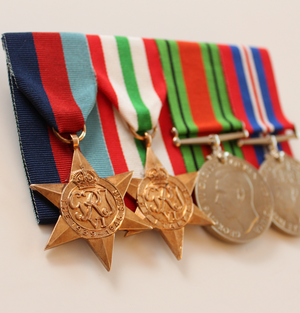
Many Arctic veterans also qualified for other campaign awards, including:
The Arctic Star is worn according to the official Order of Wear established by the Ministry of Defence.
The Arctic Star is highly sought after by:
As one of the newest British campaign awards relating to the Second World War, it holds particular significance for families researching wartime service.
The Arctic Campaign remains one of the most demanding and heroic operations of the Second World War. The Arctic Star stands as a lasting tribute to the sailors, soldiers and airmen whose service helped secure Allied victory under some of the harshest conditions ever faced in wartime.