
Expert Support
Visit our Helpdesk
Visit our Helpdesk

A medal should feel right in the hand before it is ever worn or displayed. That is often the clearest difference with British-made die-struck medals. The detail is sharper, the weight is more convincing, and the finish has the character expected of an award rooted in military and national tradition.
For veterans, families and collectors, that difference is not cosmetic. A medal may represent service on operations, a relative's record, or a carefully assembled group built over many years. When accuracy matters, the method of manufacture matters too.
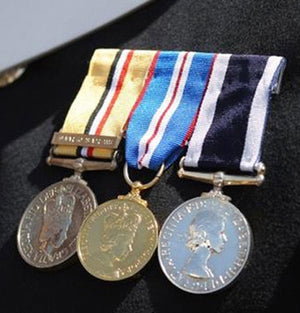
Die-striking is a traditional production method in which a design is impressed into metal using hardened dies under significant pressure. That process produces crisp relief, defined lettering and a more precise finish than many cheaper cast alternatives. Fine lines in a monarch's effigy, sharper edges on a star or cross, and cleaner ribbon suspender detail all tend to hold better when a medal has been properly die-struck.
British manufacture adds another layer of confidence. It speaks to established standards, closer attention to historical detail and a production heritage that suits the subject matter. For buyers seeking replacement medals, display pieces or replica awards for wear, that provenance carries weight. It is not simply about where an item is made. It is about trust in the finished result.
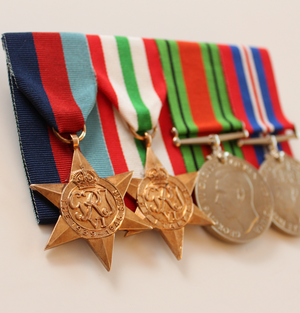
There is also a practical point. Better striking usually means a medal presents more cleanly when court-mounted, swing-mounted or framed. The surfaces catch the light as expected, the detail remains readable at close range, and the overall group has the right visual balance.
Not every buyer needs the same level of fidelity, and it is worth being honest about that. If someone wants a low-cost novelty piece for casual use, the finest strike may not be essential. But for parade wear, collecting, restoration work or family presentation, compromises become obvious very quickly.
A cast medal can look acceptable in a photograph, yet feel soft in the detail when handled. Lettering may lack definition, edges can appear rounded, and the face of the medal may not have the same depth. Over time, those differences stand out even more when the medal sits beside original issues or better-made replicas.
A die-struck medal is usually chosen because the buyer wants something closer to the standard expected of proper military presentation. That applies whether the medal is a campaign award, a commemorative issue or a replacement for a lost family piece. It is the nearest thing to confidence short of holding the item and comparing it directly.
There are two main contexts in which quality becomes especially important - wear and display. For wear, the medal must look correct at a glance and under inspection. Veterans attending remembrance events, regimental functions or other formal occasions do not want medals that appear poorly formed or out of keeping with the rest of a group.
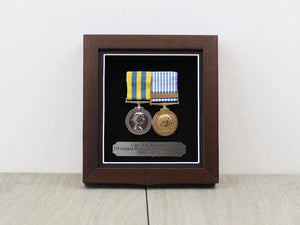
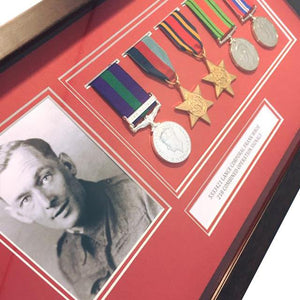
For display, the eye lingers longer. Families commissioning a frame for a father's service medals or collectors building a period group want consistency in strike, finish and proportion. A strong die-struck example sits comfortably in a mounted set, whether full-size or miniature, and gives the whole presentation a more credible appearance.
This is particularly relevant when combining medals with professional services such as engraving, ribboning, mounting or bespoke framing. High-quality manufacturing provides a stronger foundation for those finishing stages. A well-made medal deserves careful presentation, and careful presentation is easier to achieve with a well-made medal.
The phrase itself is a useful starting point, but buyers should still look closely at what is being offered. British-made and die-struck are meaningful descriptions only when supported by specialist knowledge and accurate categorisation. A trustworthy retailer should be clear about the medal type, campaign, size and intended use.
For replica medals, licensing and specification matter as well. In some cases, buyers need an MoD-licensed replica rather than a generic reproduction. In others, the priority may be historical accuracy for a pre-war or wartime issue where exact style, suspender type or ribbon pairing is important. The more specific the requirement, the more important specialist support becomes.
Images also help, but they should not be the only basis for a decision. Good photographs can show finish and shape, yet they do not always reveal weight, edge quality or how sharply the design has been struck. That is why buyers often prefer established medal specialists over general gift retailers or surplus sellers. Experience shows in the details.
Replacement medals are rarely just another purchase. They are often ordered because original medals were lost, stolen, damaged or never passed down. In those circumstances, the buyer is not only looking for something that resembles the award. They are looking for something respectful.
That is where British-made die-struck medals come into their own. They offer a level of finish that suits the significance of the piece. A family replacing a grandfather's campaign medal group, for example, may accept that a replica is not the original issue, but they still want one that reflects the dignity of the service it represents.
There is also less room for error when medals are to be worn on ceremonial occasions. An inaccurate or poorly made replacement can distract from the purpose of the event. A properly made die-struck medal helps ensure the focus remains where it should be.
Collectors tend to notice details that casual buyers might miss. Relief depth, rim finish, suspension form and overall strike quality can all affect how a medal sits within a collection. When building themed groups by conflict, regiment or campaign, consistency becomes part of the appeal.
That said, collecting is not one single market. Some collectors want original issued medals only. Others are content to include high-quality replicas for display, study or to complete a representative group where originals are scarce or prohibitively expensive. For the second group, die-struck manufacture is often the sensible minimum standard.
It also helps preserve the distinction between a serious collection and a decorative assortment. A well-chosen replica medal, clearly understood as such, can still support historical presentation when the manufacturing quality is right.
Even the best medal can look unfinished if it is poorly mounted or paired with inferior ribbon. This is one area where buyers sometimes focus heavily on the medal itself and overlook the supporting work. In practice, proper court-mounting, accurate ribbon selection, neat brooch fitting and sympathetic framing all influence the final result.
There is a clear advantage in sourcing the medal and the finishing service from the same specialist. It reduces guesswork and helps ensure compatibility across the full set. A business such as Empire Medals is built around that joined-up approach, supplying the medal itself while also supporting engraving, mounting, cleaning and presentation.
For customers dealing with inherited medals, mixed groups or older awards that need careful handling, that expertise is especially valuable. The right answer is not always to replace everything. Sometimes one medal needs remaking, another needs ribbon, and the whole group needs remounting. It depends on condition, intended use and how closely the owner wants to follow original practice.
Quality usually costs more, and buyers should expect that. A British-made die-struck medal is not competing with the cheapest end of the market. It is competing on correctness, finish and confidence. For many customers, that is a fair trade.
Still, value depends on the purpose. If the medal is intended for a formal mounted group, a presentation frame or regular remembrance wear, spending more on a better-made piece often avoids disappointment later. If the need is temporary or informal, a lower specification item may serve. The key is to match the medal to the reason for buying it.
That is the practical advantage of buying from a specialist catalogue rather than a general seller. The choices can be made with the use case in mind, whether that is parade wear, collecting, replacement, gifting or family display.
A medal marks service, sacrifice, duty or remembrance. It should be made with enough care to reflect that. When buyers choose quality at the point of purchase, the medal is more likely to retain its dignity on the chest, in the cabinet or in the family frame for years to come.
Leave a comment