
Expert Support
Visit our Helpdesk
Visit our Helpdesk

A poorly mounted group is usually spotted at a glance. The ribbons sit unevenly, the medals knock against one another, or the whole bar pulls awkwardly on the jacket. When medals carry service, sacrifice and family history, that sort of finish is not good enough. A professional military medal mounting service is there to make sure medals are presented correctly, worn with confidence and preserved with proper care.
For veterans, serving personnel, collectors and families, mounting is not a cosmetic extra. It affects how medals hang, how they wear on parade, and how well they stand up to years of handling, storage and display. It also matters because British medal tradition is specific. Order, spacing, ribbon use and style of mounting are not simply personal preference in every case. Accuracy comes first.
At its simplest, a mounting service arranges medals into the correct order of wear and secures them for presentation or use. In practice, the work is more exacting than that. The medals must be checked against the ribbon entitlement, matched carefully, aligned consistently and fixed so the finished group looks right from the front and sits properly when worn.
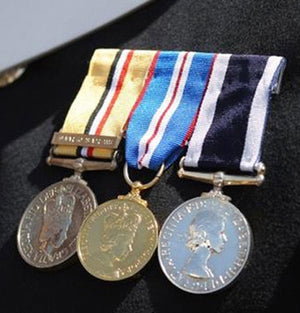
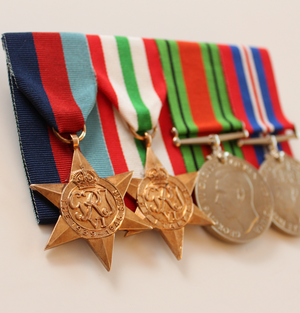
A proper service will usually deal with both court mounting and swing mounting, depending on the medal group and the customer's needs. Court mounting fixes the medals onto a stiff backing so they remain neat and controlled, which many people prefer for ceremonial use and formal presentation. Swing mounting allows medals to hang more freely in the traditional style. Neither is automatically better in every situation. It depends on service custom, personal preference and how the medals will be used.
The work may also include replacing tired ribbons, correcting older mounting, securing loose suspensions, fitting brooch bars, and preparing miniature groups to the same standard as full-size medals. Where medals are being built into a group for the first time, the service should also ensure the order of wear is correct before anything is permanently assembled.
The first reason is ceremonial accuracy. British military and civilian medals are governed by established rules of precedence. If a group is out of order, mounted on unsuitable ribbon, or finished in a way that ignores convention, it does not reflect the award properly. For anyone attending remembrance events, regimental functions, parades or formal dinners, that matters.
The second reason is practical. Medals are weight-bearing objects with moving parts. If they are mounted badly, the strain often falls on the pin, the ribbon fold or the suspender. Over time, that can lead to fraying, distortion and loss. A correctly mounted group spreads weight evenly and reduces avoidable wear.
The third reason is preservation. Many medal groups are not everyday items bought for display alone. They may have belonged to a parent, grandparent or spouse. They may include campaign awards that are difficult to replace or older pieces with family provenance. A careful mounting service helps protect the group while allowing it to be worn or displayed with dignity.
This is one of the most common questions, and the answer is not always the same.
Court mounting is widely chosen because it gives a compact, even appearance. The medals are mounted on a shaped backing, usually with the ribbons folded and stitched into a formal arrangement. The medals overlap neatly where necessary and do not swing freely. For parade wear, formal presentation and many display purposes, this creates a smart, stable result.
It is often the best option where a larger group needs to sit cleanly on a uniform or blazer. It can also be more comfortable in wear, as the medals move less.
Swing mounting keeps the medals hanging individually from the mounting bar, allowing natural movement. Some recipients and collectors prefer this style because it retains the more traditional character of the medals. Certain groups simply look right when left to hang in that manner.
The trade-off is that swing-mounted medals can knock together more readily and may be less controlled on parade. For occasional wear, that may be perfectly acceptable. For regular ceremonial use, many customers choose court mounting instead.
A specialist military medal mounting service should begin with accuracy, not guesswork. That means checking the medals themselves, confirming the correct order of wear and identifying whether any ribbons, clasps or devices need attention before mounting starts.
Good craftsmanship should be visible in the finished group. Ribbon lengths should be even, overlaps consistent and the reverse neat and secure. The brooch fitting should be strong enough to support the group properly. If the medals include miniatures, they should mirror the full-size set in order and finish rather than being treated as an afterthought.
It is also worth expecting practical advice. Not every customer arrives with a complete, ready-to-mount group. Some need replacement ribbons. Some are working from an original single medal and a known entitlement. Some have inherited medals that were mounted years ago and now need correction or restoration. A dependable service should be able to deal with these situations carefully and explain what is appropriate.
There are times when an existing bar should be left alone, particularly if it has direct personal provenance and remains sound. But many older groups benefit from remounting.
Ribbons can fade, become brittle or pick up staining over time. Pins may weaken. Previous mounting may be inaccurate, especially where medals were added later. In some inherited groups, the order of wear has been guessed at by a family member rather than checked properly. Remounting allows the set to be corrected and stabilised without altering the medals themselves.
This is especially important for groups intended for wear at remembrance services or regimental occasions. A medal group that has spent decades in a drawer may look respectable enough until it is pinned on and the weaknesses become obvious.
This is a point that is often overlooked. A group prepared for parade-ready wear must cope with movement, weight and repeated handling. A group intended for framing or case display has different demands.
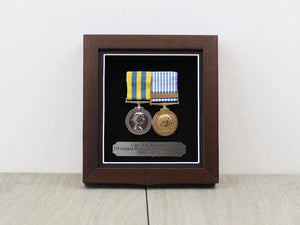
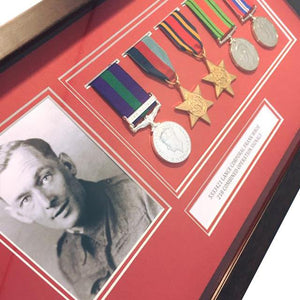
For wear, security and balance are critical. The medals need to sit flat and pin reliably. For display, visual presentation may take priority, particularly if the group is being framed alongside insignia, photographs or service records. The mounting still needs to be correct, but the finish may be planned around the display format.
That is why specialist retailers and service providers are valuable. They can usually prepare medals not only for wearing, but also for framing, presentation cases and bespoke family displays. Where a medal set is both worn occasionally and displayed at home, it is worth discussing that from the outset.
Mounting is only as good as the materials used. Inferior ribbon, lightweight brooch bars or poorly matched replacement medals can undermine the entire result. For modern and replacement groups in particular, authenticity matters.
MoD licenced replica medals, British-made die-struck pieces and correctly matched ribbons give a mounted group the right weight, appearance and finish. This is especially important where medals are being replaced because originals were lost, or where a family is building a representative group for remembrance wear. A proper service should treat the medal components and the mounting work as part of the same standard.
Empire Medals is known for that joined-up approach - supplying the medals, ribbons and finishing services together so the final group is accurate, consistent and ready for use.
The obvious customers are veterans and serving personnel preparing medals for parade, mess dress or formal events. But they are far from the only ones.
Families often need mounting for inherited medals before a remembrance service. Collectors may want campaign groups mounted correctly for storage or presentation. Reenactors and heritage buyers usually need historical accuracy as much as neatness. There are also customers buying miniatures for dinners and formal occasions, where a poor mount is particularly noticeable because of the smaller scale.
In all of these cases, the common thread is trust. People are handing over medals that represent real service or valued collections. They need to know the work will be done properly.
A specialist provider should understand British medal conventions without having to be led through them. That includes campaign-specific knowledge, current and historical order of wear, and the differences between military, civilian and commemorative groups.
It also helps to choose a service connected to a wider medal specialism. If replacement ribbons, clasps, replicas, miniatures, engraving or framing are needed, it is far easier when one expert source can handle the entire job to the same standard. The result is usually more accurate and more coherent than piecing the work together from general retailers.
The best military medal mounting service is not the one that simply fixes medals onto a bar. It is the one that respects the award, understands the regulations, and finishes the group in a way that looks right now and still looks right years from now.
If medals matter enough to wear, remember or pass on, they matter enough to mount properly.
Leave a comment